Accessibility Tools

Skip to main content

Author: Alex Marthaler

Welcome to the New Dalcroze USA Website

After months of collaboration, creativity, and care, we are thrilled to open the doors to our brand-new home for all things Dalcroze!

This project has been a true community effort. A huge thank you goes out to our board, committee members, and volunteers whose feedback, ideas, and support helped guide this redesign every step of the way. We couldn’t have done it without you. (Especially Lori Forden, Katie Couch, Mira Larson, and Aaron Butler!)

What’s New?

  • A Fresh, Dynamic Look – Clean, modern, and mobile-friendly, the site is designed to inspire and welcome.
  • Easier Navigation – Find what you’re looking for quickly, whether it’s resources, events, or chapter connections.
  • Member Login – Members can now access exclusive content and benefits easier than ever.

A Hub for the Whole Community

  • Resource Library – The largest and most trusted online collection of Dalcroze eurhythmics and music-and-movement resources.
  • News & Blog – Stay up to date with insights, stories, and announcements from across the community.
  • Event Listings – Explore upcoming workshops, trainings, and gatherings in one place.
  • Chapter Pages – Connect with your local chapter to see what’s happening in your region.

This new site is more than a redesign—it’s a gathering place. A space to learn, connect, and grow together as we carry forward the spirit of Dalcroze in the USA.

Explore & Get Involved

The site will continue to evolve with new resources, events, and stories. We invite you to bookmark the page, explore, and come back often as we add more.

Plus, let us know what you think! What do you find most useful? What would you like to see next? Leave a comment below or send us an email!

Surprising Discoveries about Children and Race

As a music educator, you know how important it is to engage children in music at an early age. Babies, toddlers, and preschoolers all respond with glee to inviting rhythms, melodies, and harmonies. They bounce, tap, sing, and swing their way into absorbing the language of music. A young child’s whole body and being is like a sponge soaking up all the musical sounds heard in their environment. As children grow, they bring these early experiences into their later years, forming their musical sensibilities and perceptions.

Children also absorb messages about race. Racial messaging is everywhere, and children are naturally curious about racial differences. They are eager to see patterns and make sense of their environment.  Observations, informed by messages from their home, school, community and cultural life, become understandings and develop into concrete beliefs.

At what age do you think children notice racial differences? 

At what age do you think children’s ideas about race solidify? 

The answers to these questions may surprise you. They surprised me.

How to Talk with Children About Race

On February 3rd, 2024, Isabel Cruz, Amsterdam-based early childhood educator and diversity and inclusion consultant, offered an online workshop, How to Talk with Children About Race, sponsored by the Dalcroze Society of America’s Diversity, Equity, and Inclusion (DEI) committee. Cruz guided participants in a 90-minute session that sparked conversation and led me to unexpected realizations about young children and race.

Talking about race can stir feelings. Although I’ve been involved in DEI work for several years, a ripple of nervousness ran through me as the workshop began. What might be asked of me? Will the process make me feel exposed or embarrassed in some way? Unsure of what to expect from the online event, these thoughts arose unbidden. As the workshop unfolded, however, I appreciated Cruz’s welcoming manner. Isabel set the stage for a supportive and meaningful experience by laying out the following community agreements:

  • Be curious and open-minded
  • Lean into discomfort – it’s how we grow!
  • Together we know a lot
  • Accept non-closure

These guidelines let me know that a willingness to listen and learn was a positive start. Any uncomfortable feelings that might arise within me could be welcomed rather than feared. They meant I was in a place where growth could occur. Just like in a Dalcroze class, if you’re never challenged, how can you develop new understanding and skills?

Cruz emphasized that race is a concept invented during the time of slavery to justify the cruel and inhumane treatment of enslaved peoples by slave owners for financial gain. Although a construct that has no basis in biological fact, race plays a major role in our society. Contrary to myths perpetuated by some, children are not color blind. Young people are hardwired to notice differences and make sense of patterns they observe in the world. What are the rules? They wonder.

Children and Racial Understanding

Isabel suggested two children’s books which foster racial understanding as well as visualize and normalize interracial friendships:

Our Skin by Megan Madison & Jessica Ralli, illustrated by Isabel Roxas

The Boys by Lauren Ace, illustrated by Jenny Lovlie

So, when do children notice racial differences and solidify their ideas about race? Studies show that babies as young as 3-6 months old notice racial differences. By 3 years old, children start to make comments and by 4-5 years old, they start to show signs of racial bias. By 6 years old they identify as part of a racial group and by 7-9 years old they voice bias they have learned. At the age of 9-10 years old children’s attitudes solidify and can be very hard to change. Check out the chart below shared by Isabel Cruz which details some of the studies done involving children and race awareness.

I was struck by how young racial awareness and bias develop in children and amazed to learn that by age 9-10 years old racial beliefs are so ingrained they’re very challenging to change. Wow, even more reason to expose young children to positive racial messaging and find the courage to talk with young people about race. Isabel Cruz offered the following guiding principles:

  • Nurture positive racial identity
  • Affirm racial differences
  • Confront stereotyping & misinformation
  • Accept that mistakes will happen – Listen, learn, and apologize

Additional tips for talking about race

  • Affirm children’s questions and observation – “I see you noticing that…”
  • Ask open-ended questions: “What makes you say that? Tell me more.”
  • Listen and discover where they are confused so an accurate understanding can emerge.
  • If you don’t know, say “That’s a great question. Let’s find out together.”

Also, in responding to a child’s comment about someone’s race, Cruz said that it’s helpful to ask yourself these questions: Is it an observation? Is it a negative judgement?

Once this is determined, she guided us further on how to talk with a child about their racially biased comment.

Responding to a child’s comment about race

  • Think of the event as a teachable moment
  • Do not shame the child
  • Determine where the ideas are coming from by asking “Can you explain what happened?”
  • Be clear if harm was done – “Do you think it’s fair?”
  • Repair the harm – “What do you think you can do to make the other person feel better?”

Be a role model!

As teachers, we can speak up about racism and model respect for all peoples.

Knowing that children absorb racial messaging at a very young age, it’s important that we become more aware of these issues. As music educators we can be a voice for racial justice and equality. We can be a vehicle of positive change in our classrooms and communities, planting seeds of respect and cooperation among people of different backgrounds and experiences.

We Shall Overcome

At the end of our time with Isabel, a question came up about working with the civil rights anthem, We Shall Overcome. Some individuals wondered how, or if, to present such a song in their classroom.

Isabel Cruz offered respectful ways to share this song with children, especially if the students and/or teachers are not Black.

We Shall Overcome is a song that has great cultural, historical and spiritual significance to the Black community. I believe it is important to honor this by providing age-appropriate information about the origin of the song before presenting it to children. As music educators, this is also an opportunity to teach children about the power of music (i.e. protest music) to make social change. When teaching about music, such as Black spirituals, where we lack the lived experience, it is respectful and enlightening to invite those with lived experiences to teach the topic (ex: invite a guest artist/speaker). If that is not possible, use sources that come from people of that cultural group.

Children’s book that could be incorporated into a lesson: We Shall Overcome by Bryan Collier

Book review: https://www.goodreads.com/en/book/show/55977822

Youtube: https://www.youtube.com/watch?v=gDKG0kt0kYc

Background info on We Shall Overcome: https://www.kennedy-center.org/education/resources-for-educators/classroom-resources/media-and-interactives/media/music/story-behind-the-song/the-story-behind-the-song/we-shall-overcome/

I will leave you with Isabel Cruz’s invitation to take a step in the direction of racial equity:

Tips for next steps:

  • Start with yourself
  • Avoid colorblind language
  • Normalize talking about race
  • Accept that mistakes will happen
  • Be a lifelong learner!

What action step are you going to try?

Updates from the DEI Committee

Recently I attended a reunion of the k-8 school where I taught from its founding in 2005 until 2016. The Folk Arts-Cultural Treasures Charter School was founded by a group of primarily Asian American but also African American social justice activists and folk arts advocates. The vision of the school is to teach through a lens of social justice and folk arts, supporting primarily immigrants and communities of color in center city Philadelphia. And it is going strong as it enters its 20th year.

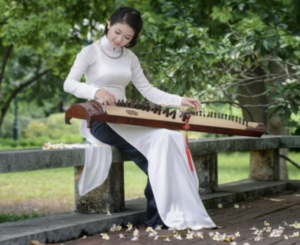
The folk arts emphasis is truly brilliant. The school provides both introductory and immersive experiences in African music and dance, Cambodian dance, Indonesian dance, Vietnamese zither (dan tran), African story-telling, Mexican craft and culture, Chinese opera (the physical, martial arts component), plus more. Students are guided to respect and honor their own and other cultures. They learn the values inherent in the arts – team building, discipline, creative expression, mind-body connection.

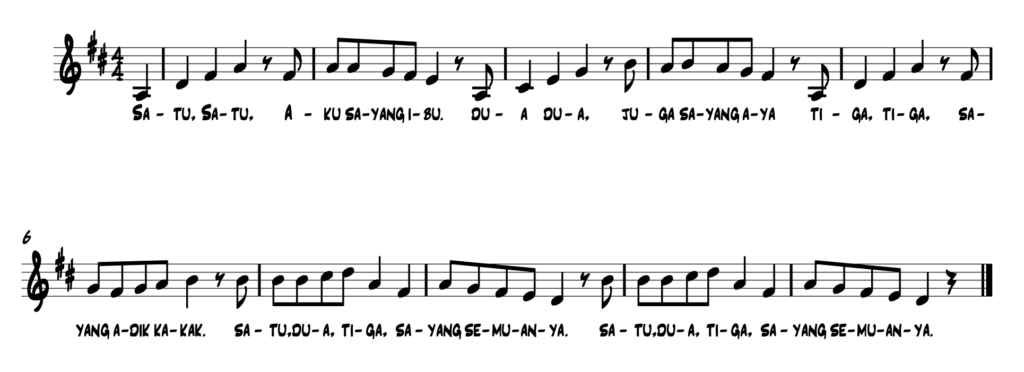
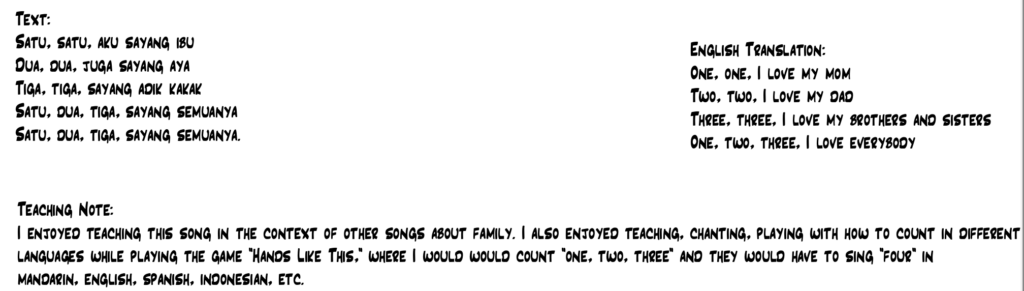
The music class and choirs emphasize learning songs and music from a variety of cultures, and singing is a central part of the many, school-wide “ritual calendar events” throughout the year. These include the mid-autumn festival, coordinated with Philadelphia’s Chinatown, “many points of view day,” coordinated with the holiday once known as “Columbus Day,” among many others. We created a song book, now in its 3rd printing, of the songs sung throughout the school year. One favorite song is included here.

Difficulties are not absent

It is not utopia. There are cultural clashes, among other challenges that come with a mixed urban population. One that stood out for me was what I perceived to be the cultural clash between the Asian American and African American students. A dynamic in that clash was the use of voice volume. I found that some of the Asian American children tended toward using a softer speech volume and some of the African American students used a louder speech volume. Also, I believe I observed some cultural differences in use of personal space and eye contact, and sometimes all of these cultural differences resulted in the African American students getting called out more for being disruptive. In fact, if you walked by the dean’s office at any one time, chances are you would see Black students being disciplined.

Attending the reunion was one Black male, whom I will call Akim, who, as a kindergartener, already evaded eye contact with me and who acted in a manner that I thought at the time was oppositional. This began what I perceived to be a clash between him and me that waxed and waned until he graduated from 8th grade.  In addition, I heard from several African American students that they felt unfairly singled out and disciplined.

At the reunion, I stood back and looked at the room of about 60 students and staff, noticed the group of young, Black men clustering in one area of the room, and I thought about all the thinking, talking, reading and listening I have been doing around DEI. I felt a strong sense that we are evolving, that we do not have all of the answers nor have solved all of the problems, but our conversations are moving us forward, and, as is taught in many somatic practices, awareness is key.

Perspective shifts

In researching the topic of cultural differences in the classroom I found an article called “Cultural, Ethnic Differences and Educational Achievement of African Heritage Students: Towards Employing a Culturally Sensitive Curriculum in K-12 Classrooms: A Literature Review,” by Patrice Juliet Pinder.

Although too complex to give a thorough overview here, Pinder discusses theories that explain how some students are unable or unwilling to code-switch from their home culture to mainstream (White) culture, and sometimes this presents as oppositional behavior.  This perspective might have helped me as I began teaching in public schools.

At the reunion, I made a point of going over to Akim. He stood taller than me, wearing a hoodie that made it a little hard to see his face, but, as I approached, he looked up and made eye contact with me, then reached out and hugged me hard. It was great to hear about his life, his accomplishments, and to feel the warmth between us.

I imagined how I would have – or would now – respond to a student like Akim, now that I have a deeper understanding. I imagine that I might feel less tension in my musculature, less holding, as I might take a deep breath and make gentle efforts to intentionally build a relationship with him. I don’t think there is a formula for what to do, but I know that our attempts to understand, our conversations, our reflection of our own privilege and an attitude of humility helps.

We continue to meet on Zoom on the last Sunday of each month for “Conversations on Undoing Racism.”

Remembering Annabelle Joseph

We learned this morning that Annabelle Joseph, our friend and colleague of many years, passed away last evening (11/19/24).  Annabelle was an alumnus of Carnegie Tech (Piano Performance, 1953) and taught Eurhythmics and Solfège in the Carnegie Mellon University School of Music from 1989–2016 (27 years). She was the Director emerita of the Marta Sanchez Dalcroze Training Center and was a beloved and sought-after teacher internationally. Her students are found in leading positions and grand stages on five continents.  We are forever in her debt for the legacy she created in the Eurhythmics program here, as well as the international reputation that her leadership supported. Personally, I can say with all sincerity that I would not be in the positions I am in or have experienced many of the most significant successes of my career were it not for the guidance and support of Annabelle. Stephen Neely Director, Marta Sanchez Dalcroze Training Center Carnegie Mellon University Pittsburgh, PA

Please help the DSA in remembering Annabelle Joseph. In the upcoming edition of Dalcroze Connections (spring 2025), we will publish your memories of your time with Annabelle. Please send any short remembrances to editor@dalcrozeusa.org or by leaving a comment to this blog post.

Call for Submissions: Remembering Anne Farber

It is with sadness that we announce the passing of Anne Farber from a heart attack on August 17, 2024. Many of us knew Anne through her brilliant teaching at the Longy School in Cambridge, along with Lisa Parker, and the Lucy Moses School in New York, where she founded the ongoing Dalcroze School. Although confined to her apartment, Anne continued to live a life with friends, family, and music. She retained her piano facility, playing the great American songs with the same finesse she showed all her life. She welcomed visitors and took a lively interest in their lives. Witty and clever, able to find just the right word, Anne remained the uniquely intelligent person beloved by so many of us. Colleagues, friends, and especially students (so many of us!) mourn her loss. — Cynthia Lilley
The following is Anne’s obituary, reprinted from the New York Times:
Anne Farber, an esteemed music educator and pianist, passed away at the age of 92 on Saturday, August 17, 2024 at her home in New York City. After high school, she attended The New School of Music in Philadelphia, later earning a B.A. in Comparative Literature at the University of Wisconsin, Madison. After graduating, she moved to New York City, where she played for the dance classes of Martha Graham, Jose Limon and Alvin Ailey. She married Dr. Leslie Farber, a well-known psychiatrist and writer, in 1960. After living in Washington, D.C., and Stockbridge, MA, the couple ultimately settled in New York City with their three children, Luke, Seth, and Phoebe. She obtained her Dalcroze License in 1973, and earned the prestigious diplôme supérieur from the Institut Jaques-Dalcrozein Geneva, Switzerland in 1984. For over forty years, she taught Dalcroze throughout the United States, Germany, England, Canada, Taiwan, and Japan. She maintained a busy teaching schedule, seeing thousands of students both in her home and institutions including The Special Music School, The Diller-Quaille School, The Longy School of Music, New York University, The Lucy Moses School, and Manhattan School of Music. Anne is survived by two brothers, Christopher Clague and Llyn Clague, her children, Luke, Seth, and Phoebe, their respective spouses, Nina Farber, Liz Queler, and Craig Levine, and seven grandchildren, Jessica, Molly, Joey, Isabel, Rachel, Eliza, and Caleb. She was predeceased by her stepson, Stephen Farber. A memorial will be held at The Lucy Moses School on November 2nd at 12pm.
We invite the Dalcroze community to also help us honor Anne’s memory by sharing a short remembrance of your time with her, to be published in the next edition of Dalcroze Connections. Please send your submissions to editor@dalcrozeusa.org. A memorial service for Anne Farber will be held at the Lucy Moses School on November 2, 2024. Contributions in Anne’s memory may be made to the Dalcroze Society of America.

The ICDS Heads to Luxembourg

The International Conference of Dalcroze Studies (ICDS), in its 11 years of existence, has blossomed into an exciting new major event in the Dalcroze world. It attracts Dalcroze, Dalcroze-adjacent and Dalcroze-curious participants from around the globe, enabling practitioners to mix fruitfully with world-renowned performers, clinicians, and scholars in fields from music education to neuroscience. Last year Americans hosted ICDS6 in our own backyard, at Dalcroze powerhouse Carnegie-Mellon University, and it did not disappoint. Keynotes included music legend Meredith Monk, who reflected on how Dalcroze informed her creative process from a young age, as well as eminent music education professors from Boston University and the University of Southern California.  In the evening, we were treated to a unique collaboration between a capella group Roomful of Teeth and dance group Attack Theater. Our priceless Polish contingent spiced up our days with their fun and unique performance pieces, and, I don’t know about you, but I could watch Michael Joviala and Dawn Pratson improvise together all day long. The conference concluded with two exciting announcements: First, there was a transfer of leadership, from the conference’s original founder John Habron, who brought everything into being, to two new co-chairs – Stephen Neely and myself. We’re awed and excited to take this conference into the future, and we’ll do everything we can for its success. Second, we’ll be holding ICDS7 at the University of Luxembourg, where it will be overseen by two tremendous co-chairs, Luc Nijs and Emma Shubin. Emma is of course an American Dalcroze institution, founding Integral Steps in Colorado, and now obtaining a PhD in Luxembourg with Luc. Luc is just the sort of brilliant and interesting scholar ICDS hopes to appeal to. A professor of early childhood music education, he publishes on topics combining music, psychology, education, and motion capture. The welcome page for ICDS7 can be found at www.dalcroze-studies.com .

Why attend the ICDS?

The ICDS summer conference occupies a uniquely enriching role for Dalcroze teachers. It complements more specialized Dalcroze summer courses by focusing on the many interfaces between Dalcroze, scholarship, and society. We emphasize the interdisciplinary nature of our conference in next year’s theme, “Building bridges through music and movement: Inspire, Imagine, Transcend”. Submissions are asked to align along one of eight thematic tracks:
  • Music and Movement through Technology
  • Creativity in and through Music and Movement
  • Music and Movement for Well-Being
  • ​Music and Movement Across the Lifespan
  • Movement in Instrumental Music Learning
  • Diversity in Music and Movement
  • Bridges
  • Out of the Box
You can view a detailed description of each track at https://www.dalcroze-studies.com/thematic-tracks. As usual, our keynotes will bring cutting edge thinking from prominent voices in the scholarly world. We will be announcing our keynotes shortly on our mailing list, but expect an exciting lineup encompassing the relationship between gesture and musical perception, the integration of music, movement and dramaturgy, and the medical benefits of Dalcroze work in seniors programs. ` After Covid, ICDS found ways to integrate virtual attendees into its experience, and there will be virtual attendees and presenters. As someone who chaired many of these sessions last conference, it is exciting to watch Dalcrozians log in from around the globe and present descriptions of their work, and the diverse populations they work with.

Many modalities for submission

In addition to the scholarship, the ICDS also offers a wide range of practical and applied offerings that will give you fresh ideas for your Dalcroze practice, or give you a chance to share your own experiences and ideas with the world. Within each of the thematic tracks, there are numerous formats for submission:
  • Workshops (60 minutes including discussion)
  • Paper / Workshop combination (90 minutes including discussion)
  • Symposium (for 3-6 delegates, 90 minutes)
  • Roundtable (90 minutes)
  • Performance (variable timing)
  • Paper (20 minutes with 10 discussion), including online presentations
  • Poster
Many of our past workshops and rountables have been of, by, and for practical issues in Dalcroze education. Our papers and posters have not been limited to scholarly studies either – many contained elements of practice reflection. Some of these are by certified Dalcroze teachers, and many others are by adjacent practitioners in education, music, theater, and dance. The binding element is the revolutionary ideas of Emile Jacques-Dalcroze and the many ways these ideas have taken root in our society and changed the world. You can find the submission page at https://www.dalcroze-studies.com/call4submissions.

An International Gathering Like No Other

We’re very excited that the institution hatched by John Habron and his visionary team seems to have found a solid place in the world, with one foot in the Dalcroze ecosystem, and one foot in the broader world of scholarship. We think this is also a great place for you, as a Dalcroze practitioner, to enjoy learning about a wide range of work around the world integrating music, education, developmental science, embodiment, performance, and more, and to return home enriched. You are also cordially invited to submit offerings, both individually and in groups (group presentations are particularly encouraged I’d say), to bring your own experiences and insights to the world. You are more than welcome to get in touch with Stephen and myself if you have any questions about submitting work to the conference, or if you would like any feedback on structuring your work for an acceptable submission. The submission window is open right now, and stays open through the 15th of November, 2024. We hope to see you in Luxembourg next summer for the latest Dalcroze meeting of the minds!

Introducing: Professional Teacher Outreach Support

Are you a DSA member who first learned about Dalcroze Education while attending a professional conference, or a professional teacher who has had the opportunity to teach at a conference? National and state events are one of the best ways we can share our unique work with others. In an effort to help teachers who plan to present at conferences and increase exposure to our work with a wider audience, the DSA board of trustees spent much of last year developing a new opportunity for members: The Professional Teachers Outreach Support grant, or PTOS.

Alignment with the DSA’s Mission and Strategic Plan

The PTOS program aligns with the DSA’s Mission Statement numbers one and three:
  • 1. Sustain and expand the professional practice of Dalcroze Education in the USA and in the world.
  • 3. Raise the general public’s awareness and appreciation of Dalcroze Education.
This program aligns with goals two and three in our Strategic Plan:
  • 2. Increase in-person opportunities offered by the DSA and DSA chapters. Increase opportunities throughout the United States for anyone interested in the Dalcroze work to gather together for enrichment, education or other activities that explore the body of Dalcroze work.
  • 3. Increase the number of people engaging with Dalcroze content and experiences. Increase awareness around the opportunities that the DSA and Dalcroze offer by strengthening marketing efforts for existing opportunities and materials.  Identify ways to increase membership and retain current members, continue and bolster scholarship offerings, and identify potential new areas of opportunity.

Description and Feasibility

The goal of the PTOS initiative is to generate interest in our practice, increase membership in the DSA, and, ultimately, stimulate participation in teacher-training at US training programs. The motivation for this project is the organization’s desire to reach out to “Dalcroze Deserts” and new populations of potential DSA members. (“Dalcroze Deserts,” here refers to specific geographic locations, teaching specialties, or untapped communities.) While conference presentations undoubtedly benefit the session facilitator, this project must be designed specifically to benefit the DSA. Because this is a completely new undertaking for us, we don’t have empirical evidence to support or disprove efficacy. Thus, we suggest a two- or three-year pilot project to determine if funding should continue. The alternative to this outreach effort is to encourage our PDC members and other Licentiates to continue to reach out to areas where they see the most need. A more intentional organizational approach will likely benefit the DSA more than “hoping” our leaders in teaching will remember or be willing to represent the DSA as much as themselves. The PTOS grant program has the potential to ensure this goal.

Scope and Cost

The DSA board will control funding for this initiative for the trial phase (2 years), which allows for discerning disbursement of funding to individuals (similar to our current practice in scholarship awards). The PTOS task force suggests the following should the DSA decide to move forward:
  1. Limit funding to organizations dedicated to music teaching and performance (MTNA, NAfME, Alliance for Active Music Making, Suzuki, AOSA)
  2. Cap individual funding at $500 dollars, awarding a maximum of three awards annually.
  3. Require recipients to include DSA membership information on any handouts and include a statement such as “XXX is a member of the Dalcroze Society of America” in any identifying or bio info.
  4. Provide a QR code that workshop participants can use for discounted ($5?) membership; scanning the code would allow us to track the number of individuals who access the website and/or become DSA members after participating in the workshop. Alternatively, the DSA could offer workshop participants a short (one to three month) free membership so that they can get a taste of the benefits. Access will require an email address. The DSA should provide notification to these “new members” when their temporary membership is about to expire.
  5. The QR code would include a short survey about the presentation that would need to be completed before the discounted/free membership is established.
The above would allow the DSA to assess success of the program based on the number of people who access the website and become “temporary” members. We (the PTOS Task Force) believe this program can attract new members; it’s up to the DSA to motivate continued membership.

Finance committee recommendations for funding

Use Lisa Parker fund for the first year ($900) and in the 2nd year evaluate use of Julia Shnebly-Black donation fund.
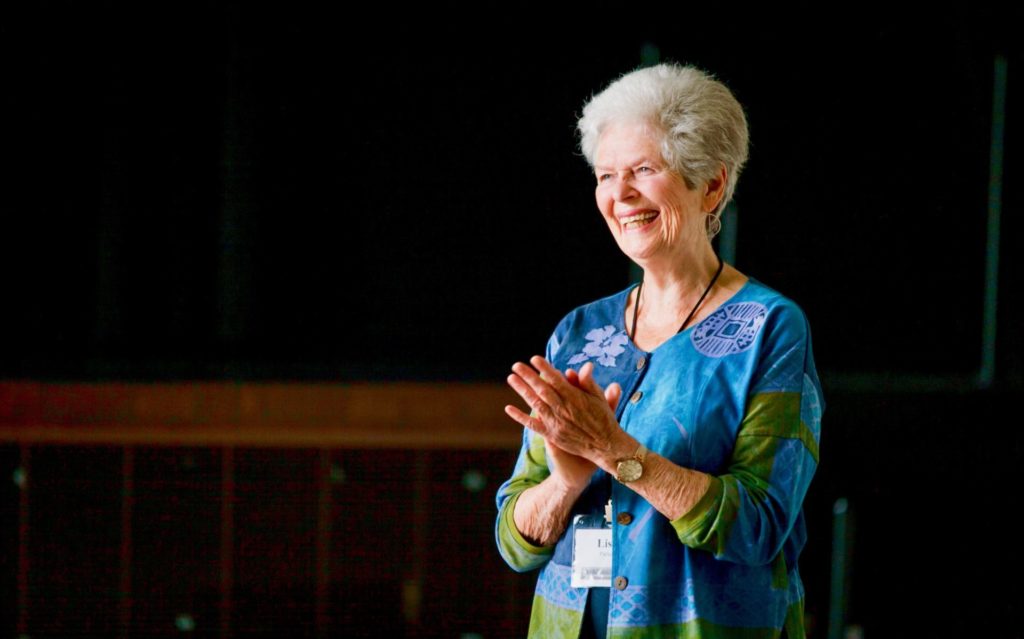
Lisa Parker has trained many Dalcroze educators.

Benchmarks, Evaluation, Quality Control

Ideally, this program will attract 3-5 new DSA members per presentation each fiscal year, for a total of 15 new members per year. Evaluation will be three-fold:
  1. Endorsement by two DSA-members with teaching credentials of the applicant as a part of the application.
  2. Post-event evaluation, via a short survey, completed by participants who choose to further investigate the DSA.
  3. A written report to the Board by awardees after the event.

PTOS Application Form

Professional Teacher Outreach Support Grant Description The purpose of Professional Teacher Outreach Support grants is two-fold: to support members by making the financial burden of Conference presentations more accessible, and to develop awareness of and interest in the Dalcroze Society of America for conference attendees. Towards this end, the DSA is seeking to support applicants presenting at conferences focused on classroom music teaching, private teaching, early childhood education, and related music fields, such as music therapy. We also seek to support teachers presenting at conferences in “Dalcroze Deserts” (specifically, in geographic locations devoid of active Dalcroze clinicians or in untapped communities). Applications are accepted throughout the fiscal year (July 1- June 30) and will be awarded on a rolling basis. We encourage applicants to apply as early as possible. The DSA will allocate $1500 toward three awards per fiscal year. Each awardee can claim reimbursement up to $500. Please note that the DSA will reimburse only expenses not already covered by the organization for which you are presenting. Eligible expenses include:
  • Travel costs
  • Room and board
  • Conference fees, if applicable
Presenters should provide receipts within two weeks of the event and can expect reimbursement within 30 days after receipt. In exchange for funding for your presentation, awardees agree to
  1. Include DSA membership information on any handouts and indicate “xxx is a member of the Dalcroze Society of America”
  2. Provide a QR code presentation attendees can use for discounted DSA membership; the code will require a brief survey about the evaluation.
  3. Provide printed materials about the DSA to attendees. (Materials will be provided to the presenter.)
  4. Write a short (2-3 paragraph) report about the presentation for DSA Board members. (Include the # of attendees, any feedback, other observations that might help grow the DSA or how the DSA might piggyback on future events to help increase interest and membership)
PTOS Application
  1. Name:
  2. Dalcroze Credential:
  3. CV/Resume (Note: CV should include current or recent teaching experience and conference presentation experience). Upload
  4. Name, date, and location of conference:
  5. Title and brief description of your presentation.
  6. Intended audience of your presentation (preschool teachers, music ed, instrumental teachers, teachers in other disciplines, etc.):
  7. Please provide a short (150-200 word) description of how your presentation will benefit the DSA and serve the local music practitioner community.
  8. Has your conference proposal already been accepted?
  9. If not, what is the anticipated notification date?
  10. Are you being compensated for your presentation by the host organization?
Yes ___. No ___ If so, complete the following to indicate your total compensation: $50-100 ______ 100-250 ______ $250-500 ______ $500+ ______
  1. Your estimated budget:
  2. Housing/board
  3. Travel (mileage, to be paid at current IRS rate, rental car fee, airfare)
  4. Conference Registration (if applicable)
  5. Please list any expenses that will be paid by the hosting organization or other sources of funding.
  6. Please name and provide contact information for two DSA members with Dalcroze teaching credentials to endorse your work.
Please initial each box below, indicating that you agree to represent the DSA as follows: I agree to: _____ Include DSA membership information on any handouts and indicate “xxx is a member of the Dalcroze Society of America” _____ Provide a QR code presentation attendees can use for discounted DSA membership _____ Provide printed materials about the DSA to attendees. _____ Write a short (2-3 paragraph) report about the presentation for DSA Board members. (Include the # of attendees, any feedback, other observations that might help grow the DSA or how the DSA might piggyback on future events to help increase interest and membership)

Conversations on Undoing Racism (May 2024)

The DSA began our monthly “Conversations on Undoing Racism” in August of 2020, in response to the events surrounding the murder of George Floyd and the Black Lives Matter movement. We have met every month, except one, since then. Here is an excerpt from a participant’s email response to a recent session:
THANK YOU for such an engaging conversation this morning! Although I was limited in responding in real time while driving on the road, I so enjoyed considering the nuanced layers and multiple contexts involved in how we conceptualize diversity; several of you brought forward such interesting points and reflections on the videos and articles Dawn shared – much food for thought here!! I also continue to appreciate each individual’s personal experience, wisdom, and willingness to share her own perspective; I find this kind of authentic dialogue ESSENTIAL in moving the needle forward during our times…
The above comment describes how I often feel after these conversations. We have a small, committed group of around 8 – 10, five to six of whom come very regularly. The sessions are open to all DSA members, their friends and acquaintances. We have been meeting the last Sunday of each month on Zoom, from 10-11 AM, Eastern Time. The sessions are not recorded, but I take notes. For our session in April, I had prompted the group to watch a couple of videos about “The Doll Test.”
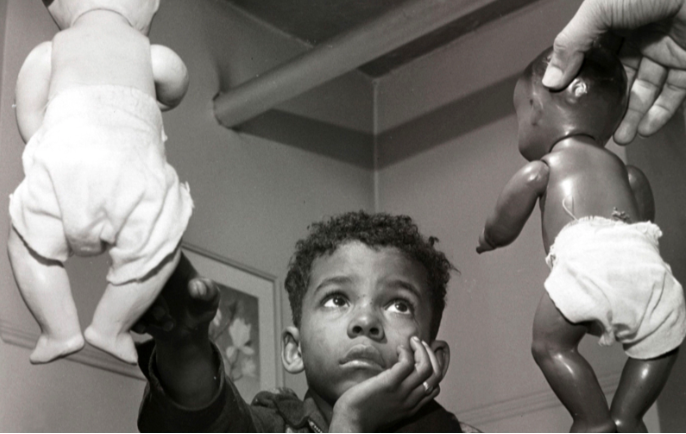
The Doll Test was designed by Kenneth Bancroft Clark and his wife, Maimie Phipps Clark, two African American psychologists, who ran experiments in the 1940s to measure what they hypothesized were the psychological effects of segregation on Black children. The Clarks’ “Doll Study” became the first psychological research to be cited by the US Supreme Court in its decision to end school segregation; it was notably influential in the Brown vs Board of Education decision. The findings pointed to Black children’s perceptions that White dolls were preferable, nicer, prettier/more attractive than Black dolls, even though the children correctly perceived themselves as Black. Another Black educational professional, Dr. Toni Sturdivant, ran a related study in 2021 and found similar results. In our discussion about these videos and this phenomenon, one of the participants shared her experience as a White woman living in the US Virgin Islands, a predominantly Black society, and explained that she was surrounded by “Black Excellence,” and a sense that Blackness was truly celebrated. She said that melanin – the substance in our bodies that produces skin, eye, hair pigmentation – is celebrated. I imagine that running the doll test in that community would demonstrate very different results. During our conversations, we weave our experiences as music educators into our discussions. We ask the question,  “What can we do, as music educators, to move our society forward toward “undoing racism?
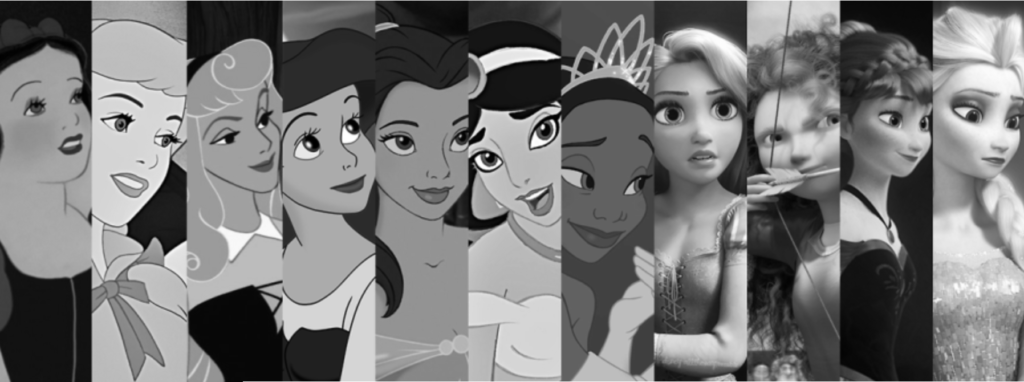
One teacher shared the following anecdote: in a NYC high school, the music teacher was not thrilled with the chosen Disney theme for a choir production. So, she chose to use the opportunity to address, with her students, the Disney princess stereotypes. She had her students watch and discuss a video about “The Doll Test.” Then she asked them to reflect on the  historical representations of characters such as princesses, and to consider how these representations did or did not reflect their own identities. She then invited the students to invent their own version of a princess, allowing them to include their cultural identities, such as racial, LGBTQ+ and non-binary identities. This story inspired hope and a sense of optimism among our participants. Our conversations have broadened to include diversity, equity and inclusion topics other than race; we have read articles and discussed issues of ableism, gender and different kinds of bias, including the bias that places musical genres into a hierarchy, with classical music on top. We have shared how heartening it is to witness the increasing diversity taking place within music institutions and the hope that we are, indeed, moving forward toward undoing racism. Come join our conversation. We meet at this Zoom link on the fourth Sunday of each month, 10 – 11 am, Eastern Time.

DSA National Conference: Rhythmic Frontiers

The 2024 National Conference is rapidly approaching! Registration is now open for Rhythmic Frontiers, which will take place at the Oberlin Conservatory of Music from June 6 – 8.

“Rhythmic Frontiers” beckons participants to explore new territories in sound and motion. As frontiers symbolize the unknown and untapped, this theme invites us to innovate, experiment, and push beyond traditional boundaries. Embrace the voyage and journey along the intertwined pathways of rhythm, movement, and music.

The schedule of events, sessions, and classes is below. Check it out and start planning where you’d like to spend your time!

Session Descriptions

Find something that catches your eye? Read below for session descriptions (arranged alphabetically by the presenter’s last names).

Children’s Demo Class: Moving to Learn Ruth Alperson Observe keynote presenter and Dalcroze expert Ruth Alperson (Diplôme Supérieur) teach a song that the children will enjoy learning: “Under the Chestnut Tree.” While the children move and sing, they will embody the concept of “phrase,” eventually transitioning from moving the phrase to freely “notating” the phrase.

Pleasures of Dalcroze Solfège: Melodizing, Harmonizing, Improvising Ruth Alperson Among Jaques-Dalcroze’s greatest legacies are unique exercises and strategies that he used in teaching sight singing and ear training. In general, movement allied with singing clarifies structures that some of us may learn at first, analytically, via music theory. Movement allied with singing makes the learning easier for many—and it is enjoyable.

Flamenco Sketches and Modal Harmony William R. Bauer Miles Davis’s solo on the track “Flamenco Sketches” from Kind of Blue has not been surpassed for its beauty. We will study it through solfège to unlock some of its modal secrets.

Silence in an Open Space William R. Bauer Silence holds a special place in Eurhythmics. The key to inner hearing, it enables us to feel music in the absence of music. The sensations of inwardly felt rhythms, melodies, harmonies, etc., become all the more present to us in silence. Let’s explore silence through movement and stillness.

I Can See Freedom: Past, Present, Future Terry Boyarsky & Melissa Tucker Delving into the contemporary song “I Can See Freedom” by African American composer Walter Robinson, we experience crusis/anacrusis and syncopation. Embracing how profoundly rhythm can connect us, we bridge past, present and future. Pushing against rhythmic boundaries, we strive to experience a frontier of freedom.

The First Frontier: Where Music and Body Meet Nicole Brockmann For new Dalcroze students, the first strange frontier is often using the body in perceiving and making music. Social and musical anxieties abound! This session invites new and experienced Dalcrozians to (re)discover the joys and erase the initial anxieties of a body-focused musical practice for themselves or for students.

A Cappella Arranging via Dalcroze Solfège Games Katie Couch Participants will be led to discover and perform a 4-part arrangement of a Marvin Gaye song through Dalcrozian solfège games.

¡Clave! Katie Cross Come explore games and strategies for exposure to (and/or mastery of) “clave,” the rhythm at the basis of much of West Africa’s traditional music and the musical genres of the Caribbean and South America! Time permitting, this workshop will include the version most familiar to Western audiences and other versions.

What’s Next?! Teaching Intermediate-Level Rhythmic-Solfège Jeremy Dittus What happens after we say, “Hello?” How do we help students reach past the introductory, basic understanding of rhythm and pitch and go further into understanding tonal relationships, intervals, meters, nuances, and more complicated rhythmic patterns? In this hands-on, dynamic pedagogy session, we’ll show how embodied knowledge can create powerful learning experiences for youth; participants will walk away with new inspiration for the Dalcroze hall!

Time Signatures: Fact or Fiction? Mary Dobrea-Grindahl What we see in a musical score doesn’t always align with what we hear and feel in music. This eurhythmics class will explore how rhythm, harmonic impulse, and melodic contour influence what we hear and how we move and the ways these elements combine to inform our artistic interpretation.

Swing, Sway, Gallop, and Play Mary Dobrea-Grindahl This improvisation class will focus on playing for movement in compound meter. We will explore ways to use harmony, articulation, melodic contour, and pedal to inspire students to sway, run, skip, and gallop. This class will offer ideas for participants at any level of mastery in improvisation.

Navigating Trauma-Informed Approaches in Dalcroze Education Lauren Hodgson & Adrienne Bedell Embark on a transformative exploration of trauma-informed Dalcroze education, delving into research-based strategies for trauma-informed classrooms and fostering somatic awareness. In the spirit of “Rhythmic Frontiers,” join us to navigate uncharted territories in sound and motion, interweaving Dalcroze teaching strategies for a holistic journey along rhythmic pathways.

Round/Spiky and/or More Eiko Ishizuka Experience groups of 2s, 3s, 4s to feel their quality of movement. Students will deal with balance of the body to learn how 3 against 4 feels in the body, with applications for repertoire.

The Empowering Art of Improvisation Mari Izumi In this presentation, I will share video recordings of my Dalcroze class for older students, ages 10–14 (most are violinists). I will show how I introduce and develop instrumental improvisation and demonstrate how it supports and enhances students’ performance skills. Through improvising, students open up; it empowers their musicianship.

Baroque Dancing Qin Ying Tan Dr. Qin Ying Tan, lecturer in harpsichord at Baldwin Wallace University, leads a session on Baroque dance. Dr. Tan has earned degrees from Yong Siew Toh Conservatory of Music, the Peabody Institute of Music, and the Cleveland Institute of Music. A firm believer of storytelling through music, Tan draws from a diverse pool of influences such as Baroque French court dance, Indonesian gamelan music, Chinese guzheng practice, as well as community song and dance.

Collaboration Between Improvising Musicians and Improvising Dancers Michael Joviala & Dawn Pratson Come rehearse the unknown with Dawn and Michael. Sound makers and movers of all levels and backgrounds gain experience listening, reacting, choosing, shaping and creating with each other. Bring your instruments!

Dynamic Di-chords Michael Joviala An entire session devoted to the small but mighty di-chord. We’ll use this fundamental building block to add more swing to your jazz phrasing, expressive ornaments to your melodic toolbox, and just the right amount of tension for your harmonic color wheel.

Children’s Demo Class: Phrasing Cynthia Lilley Observe Dalcroze in action with 8–10 year olds! This eurhythmics class will showcase students of Lauren Hodgson led by the deft and musical Cynthia Lilley. 

Games and Songs in Five Anthony Molinaro Conventional wisdom holds that meters of five are somehow inherently more difficult than meters of two, three, four, or six. In this session, participants will experience a series of games and songs that connect young children to uneven meters and encourage them to groove naturally with these patterns!

Awakening the Teaching Artist: A Living Pedagogy Stephen Neely & Anthony Molinaro How does one balance between “lesson planning,” something prepared in advance, with “lesson ideation,” the inventing, creating, and varying of our lessons in the moment to the specific needs of our students. This session will share tools for designing lessons that are creative, productive, and rewarding for both student and teacher.

The Tempo of You: Entrainment and Empathy in the Act of Being Music Stephen Neely In this 75-minute collaboration, we will explore the idea of a personal inner tempo and then consider the challenge of “being music” that is at tempos more-than and less-than our authentic selves. How am I to feel the reality of another? With examples from Bach, Dvorák, and Satie, we will consider the difference between playing the notes of and being the music of another.

Plastique Animée: From Analysis of a Musical Work to Aesthetic Experience Anetta Pasternak, Wiktoria Jańczyk & Anna Morawiec During the workshop, we will take a closer look at the successive stages of working on plastique animée, starting with exercises to raise awareness of metro-rhythmic issues realized through simple means used in eurhythmics classes, up to improvisation and the search for creative interpretation.

Movement Warm-up (Day 1 & 3) Dawn Pratson Start the morning with a thorough, full-body movement class to refresh, awaken, and enliven your soul.

Diversity, Equity & Inclusion Committee Roundtable Dawn Pratson, chair Join us for a casual conversation with the DSA DEI Committee. We will share insights and hold an open forum for questions and comments.

Movement Warm Up (Day 2) Brian Schultis Start the morning with a movement warm-up drawn from Schultis’s work as a certified Laban Movement Analyst.

Introduction to Contact Improv Brian Schultis Contact Improvisation is a form of improvised partner dance that explores elements of balance, falling, and sharing weight. Contact had its birth at Oberlin in 1972. This class for movers of all experience levels and ability will invite movers into a practice designed to help us embrace connections, spontaneity, and awareness of one another.

Aksak of the East: Complex Meter John Stevenson Explore the aksak as we dance additive and isochronic beat structures defined by Constantin Brăiloiu (1893–1958), a Romanian and Geneva resident who worked at the Musée d’ethnographie de Genève and as an assistant professor (maître de conférence) at the CNRS in Paris, and dive into a whole new rhythmic frontier, forging complex meters.

Polyrhythmic Frontiers Brian Sweigart Polyrhythm has long been a core concept in eurhythmics. During this presentation, we will explore why it is beneficial for students to study polyrhythm through movement, from simply learning the rhythm to utilizing polyrhythmic skills in the frontier of contemporary music.

Explore Rhythmic Frontiers through Improvisation Leslie Upchurch The landscape of the piano is rich with rhythmic possibilities. My workshop will open up the many possibilities that any level of pianist can explore. This exploration is the gateway to a teaching style that is a new frontier for many. We will even ride with The Old Cowboy into new harmonic territory. This is one improvisation experience everyone remembers and recognizes when they hear it!

Member Spotlight: Mira Larson

Mira Larson is a Salt Lake City-based Dalcrozian and cellist and Dalcrozian. She is currently finishing up her license level studies through the Dalcroze School of Music and Movement. Mira currently teaches in Salt Lake City at the Gifted Music School, La Maison des Enfants, and her own Rythmique Music School. In addition, Mira serves as the treasurer on the DSA’s Board of Trustees.

How were you introduced to Dalcroze work?

I first learned about Jaques-Dalcroze from his writings, after graduating with cello performance degrees and beginning to teach privately. I was dissatisfied with what I felt could be accomplished in the weekly lesson and was looking for ways to give students a broader musical exposure and deeper foundations. I had known that my inspiring relative Marie-José Ekström Rey had taught at the Institut Jaques-Dalcroze, but I was not exposed to a Dalcroze class until visiting the Dalcroze School of the Rockies in 2016.

What is your musical background?

I grew up in a musical home with a father who is a jazz pianist. I started learning cello as a young child, but loved music best as inspiration for dance and movement. I studied cello with Hans Jensen at Northwestern University (B.M.) and Natasha Brofsky at the New England Conservatory (M.M.)

How are you incorporating Dalcroze education into your musical life?

After earning my Dalcroze Professional Certificate in 2019, I rented a studio space with the aim of offering Dalcroze classes. Since 2020, Rythmique Music School has been where I invest most of my time and energy as it continues to grow as a center for music and movement in Salt Lake City. Current students are age 4 through adult. One of my aims is to integrate more faculty as well as instruments, with Dalcroze at the core. That is starting to happen this year with piano and violin/ viola. A longterm goal is to forge deep links between my Dalcroze training and conservatory string playing background.

Any other fun facts?

I grew up in a French-speaking household and do up to half my teaching in French!

Member Spotlight: Michelle Li

Every summer, professional Dalcroze students pass examinations and checkpoints, coming one step closer to finishing a Dalcroze Professional Certificate or License program. Recently, DSA member Michelle Li completed all the requirements towards her certification from Carnegie Mellon University. As part of our new Member Spotlight series, in which we introduce new Certificate holders to the greater DSA membership, I recently had the chance to interview Michelle. I was interested to learn more about her musical background, her Dalcroze journey, and how Dalcroze has found its way into non-musical parts of her life. (Above photo credit: Rebekah Chavez Wynne, Wynne Photography.) Michelle and I virtually met a few years ago as members of the DSA’s Publications Committee. We meet monthly (even during summers!) to work on creating what we hope to be valuable and interesting content for DSA members, including: publishing a biannual magazine, Dalcroze Connections (the next issue is coming soon in early October!), releasing blogs, editing and posting expert teaching videos, and more. Michelle is our resident expert at copyediting and proofing articles, and we’re beyond lucky to have her on the team!

What is your Dalcroze origin story?

The first time I ever encountered Dalcroze eurhythmics was at a choral summer camp at Westminster Choir College, back in the nineties. Dr. Tom Parente herded dozens of high schoolers together and had us pass a tennis ball around the circle to a beat. As it turned out, there was a direct pipeline from Westminster-affiliated students to Carnegie Mellon. I went to Carnegie Mellon for university, wriggled my way into a dual music and humanities degree, and met Dr. Stephen Neely, whose courses changed how I understood music.

Tell us a little about your studies towards the Dalcroze Professional Certificate.

I earned my Certificate through the Marta Sanchez Dalcroze Training Center over a period of at least a decade. The Dalcroze certification process has definitely been a long one! It was a background hum through major life events, including having a second child and the COVID pandemic. Thanks to my previous Dalcroze training under Stephen Neely, I had a boost when it came to solfège, movement, and plastique animée, so those exams were more of a joyful homecoming rather than me sweating bullets over a keyboard in the practice room. It took me the longest time to grab hold of and internalize keyboard improvisation, and there were years where I was putting in daily hours on the bench, practicing as many different scenarios as I could. Certificate prep (and hopefully, license prep) has been the hardest yet happiest and most fulfilling part of the process, and I look forward to summer workshops again when I’m able to go back.
Dr. Stephen Neely teaching at the 2023 National Conference.

What is your musical background other than Dalcroze?

I hold a masters in piano pedagogy. And sometimes I collect weird or rare instruments. I’m also terrible at ukulele and recorder.

How are you incorporating Dalcroze into your musical life/career?

I think Dalcroze has suffused every bit of my life, not just my musical life. It really is a thing that takes over completely until you’re in the middle of drafting a new novel and you realize your process for the zero draft is exactly the Dalcroze improvisation process for a plastique. In that, I mean Dalcroze taught me to improvise, adapt, and overcome, and there are so many situations where being flexible is needed, where the ability to absorb what’s happening and turn that into something positive or constructive is the best skill to have. I do use Dalcroze in so many of the private lessons I teach and have used it for decades now. Most recently, the beginners I’ve started over the last several years go months without a method book because we’re learning in a way that can’t be written into a method. We’re moving and playing games and exploring the sounds our bodies and the piano can make. We’re improvising our own music and writing down what seems pretty cool to our ears.

Are you currently offering Dalcroze classes? If so, to what ages and levels?

It’s been tough to pitch Dalcroze to schools in the Atlanta area, though I’ve had interest from some summer camps, most notably at Reinhardt University. The pandemic definitely halted momentum for a while, and now real life is the largest resisting force. I’d love to offer Dalcroze to the dancers at Agnes Scott, though, or the kids at the DeKalb School of the Arts. After lots of trial and error, it seems I get on best with either the kindergarteners and first graders, or the high schoolers. I’d also love to offer a Dalcroze for non-musicians and a Dalcroze for parents and babies class. Maybe one day in the future.

What other Dalcroze-related goals do you have now that the certificate is done?

Work on the improv test for the license, of course! I’d already started work on that, but practicing alone is so different from running a live class. I’d love to be more patient with myself and learn how not to chase after every little concept that pops up in class, but that’s a lesson learned only through lots of experience, it seems.
A photo taken by Michelle Li, which appeared in a recent issue of “Dalcroze Connections.”

Any other fun facts or trivia about you?

Let’s see…I’m an amateur orchid keeper, former Atlanta Botanical Gardens orchid volunteer, and erstwhile photographer—you may see me wandering around Dalcroze workshops, camera in hand—and when I’m not teaching or doing family stuff, I edit books, Dalcroze Connections included, and slip into my Published Author Persona to do book tours and promotional events with other authors. I slush read for Giganotosaurus, an online science fiction and fantasy magazine. I’m never not reading. And I think my favorite thing right now is to lie in bed and do absolutely nothing, though I think in the near future, my favorite thing will be learning new skills to apply to books I’m writing.

Dalcroze Education for Youth: Subcommittee Update

Current Work

The Dalcroze Education for Youth Subcommittee is comprised of members of the DSA’s Professional Development Committee. We (Adriana Ausch, Jeremy Dittus, Leslie Upchurch, and myself) have been meeting to discuss and organize common goals for Dalcroze students in the 4-7 year old age range. While our meetings began a few years ago with a literature review of other Dalcrozian publications about working with this age group, we quickly found that there could be quite a bit more current resources for Dalcroze teachers of 4-7 year olds.

Music/Movement Goals

One aspect we have started to organize is feasible music and movement goals for Dalcroze students aged 4-7. The following is a list of goals based not only on our literature review but also on our personal experiences in working with this age group:
  • Locomotor Movements (Continuous Movements)
    • Beats and/or medium tempi
      •  Walk, march, step, etc.
    • Divisions and/or faster tempi
      • Run, tiptoe, trot, jog, prance, les cloche-pieds (step-hop), etc.
    • Multiples and/or slow tempi
      • Slide, stride, lunge, etc.
    • Typical compound meter rhythms
      • Beats:  swing, sway, skate, etc.
      • Divisions:  gliding &, running &, tippy-toes, etc.
      • Uneven patterns:  gallop, chassé, skip, etc.
    • Other creative movement possibilities:
      • hop, jump, roll, crawl, slither, bounce, swim, float, creep, sneak, leap, glide, sail, fly, etc.
    • Patterns (these can be challenging for this age group, but here are some you might try):
      • Trotting-March! (e.g.  )
      • Running-Running-Running-JUMP! ( e.g.  )
      • Turn-a-round-FREEZE! ( e.g. )
    • Chassé Chassé ( e.g.   )
  • Movements in Place
    • Patsch/tap, clap
    • Sway, rock
    • Twist, turn, spin, twirl
    • Sink, melt, shrink,
    • Rise, grow, stretch,
    • Wiggle, shake
    • Bend/straighten, contract/extend
    • Push/pull
    • Gestures (with a variety of body parts)
      • Body percussion
      • Use the body to designate melodic contour
      • Use the body to designate rhythms
      • Use the body to designate meter
      • Etc.
    • NB: Some locomotor movements can be done in place and vice-versa
  • Expressive Movement/Movement Quality
    • Sense of Direction/Intention: forwards, backwards, sideways, etc.
    • Imaginative Movement (moving like a character/animal, etc.)
    • Dynamics and Expressive Qualities:
      • Strong/Gentle
      • Rigid/Supple
      • Heavy/Light
      • Smooth/Jagged
      • etc.
    • Texture:  Thick/thin
  • Use of Materials/Props to Facilitate Movement
    • Balls, scarves, bean bags
    • Percussion:  claves, rhythm sticks, drums
    • Others:  ropes, scarves, elastics, parachutes, floor markers, hoops, ribbon wands etc.
This is not a comprehensive list for Dalcroze practitioners; our goal in creating this was simply to give newly-certified teachers a place to begin when searching for movement inspiration in their lessons with 4-7 year olds. One of the great aspects of Dalcroze work is that it is constantly evolving, and this list can surely evolve as well. Do you have any comments or suggestions? Please leave a comment below if so!

Database of Activities

Another big component of our work is in creating a database of activities for 4-7 year old Dalcroze students. We have recently created a form in which veteran Dalcroze teachers (those who hold at minimum the Professional Certificate and have taught 4-7 year olds for a number of years) are asked to share detailed exercises for this age group. The collection of activities can be sorted by area (eurhythmics, solfège, improv, Plastique Animée, etc.), Dalcroze principle (including body as instrument, active listening, social interaction, and more), and Dalcroze teaching strategy (including association, inhibition/incitation, systemization, and more), among other factors. As we collect activities from our community, we will build them into a searchable database for DSA members. The goal is for one to be able to search by area, principle, strategy, or other elements. The activities that one might discover could include specific verbal directions, a score or recording, or even an image. It all depends on the data that we collect from our veteran teachers! We aim to release the first version of this database in January 2024, and will be sure to update the DSA community as we work towards this exciting members-only resource!

Introducing: “Dalcroze Education for Youth”

Designed for New Dalcroze Teachers

Have you ever taught a Dalcroze class to children ages 4-6? Or perhaps you are working on the pedagogy requirements towards Dalcroze certification and plan to do your practice teaching with this age group? Maybe you are thinking of creating a new course for 4-6 year olds in the near future?

What can I expect?

When designing a Dalcroze course for 4-6 year olds, many newly-certified teachers have questions about what elements to include, for example: the musical goals, movement goals, and specific theory-follows-practice questions to follow up an activity.

Additionally, new teachers may struggle with knowing what benchmarks your 4-6 year old students should be able to reach, especially since the goalposts may change depending on your student population. 

It can also be challenging to discover on one’s own the physical expectations of 4-6 year olds in a Dalcroze setting…can they march to the beat? Should they skip or gallop in compound meter? Can they be expected to sing the Major pentascale in tune? Which keys fits their vocal range the best?

Unfortunately…

There are resources available on this topic from previous Dalcrozians, although few are recent publications that reflect the current teaching climate. Some such writings come other continents, or other eras, even other centuries!

However:

Luckily for you, the Dalcroze Society of America’s Professional Development Committee—comprised of diplômés, diplôme candidates, and teacher-training licentiates—has formed a subcommittee to answer these questions. The newly-formed “Dalcroze Education for Youth (DEY) Subcommittee” has been meeting for over a year now, analyzing the common Dalcroze goals for teaching music to children ages 4-6.

After much discussion of the common music and movement goals and expectations for 4-6 year olds based on our anecdotal teaching experience (we have decades of work with this age group between us!), as well as a literature review of previously-published works on this topic by former Dalcroze teachers from around the world, the DEY Subcommittee has decided to create a document for public dissemination on the teaching of 4-6 year olds, to be first distributed to the members of the Dalcroze Society of America. 

“The Document”

Such a document does not yet exist in our country! While the final version is not yet ready for release, we can give some specifics about what it will include:

  • a variety of lesson plans for 4-6 year olds from experienced Dalcroze teachers (expert being defined here as working with this age group for at least five years)
  • suggestions for six-week sequences (including: seasonal themes, plastique-based sessions, solfège-centered classes, locomotor development, and more)
  • suggestions for possible year-long sequences
  • a list of the common movement goals (including locomotor movements) expected for this age group
  • a list of the common music theory goals (including simple notation, meter, harmony, and more)

We need your help

Although this document is not yet complete, the DEY Subcommittee plans on completing and releasing it to the DSA membership as soon as possible. We would appreciate knowing your thoughts: is there anything specific you’d like to see included? Any questions you have about working with this age group? Maybe you are wondering why we even need a document like this? 

Feedback that you’d like to send us (whether in the form of an email to editor@dalcrozeusa.org or as a comment on this blog) have the potential to help the greater Dalcroze community. This document is being created for you, the members of the Dalcroze Society of America. We hope it will be a useful resource for everyone, new teachers and veteran teachers alike!

We look forward to releasing our work soon.

Respectfully, 

The Dalcroze Education for Youth Subcommittee

  • Adriana Ausch-Simmel
  • Katie Couch
  • Jeremy Dittus
  • Lauren Hodgson
  • Leslie Purcell Upchurch

2022 Memorial Scholarships Fundraising Campaign

Today marks the launch of the 2022 Scholarships Fundraising Campaign—an effort to support and sustain the next generation of Dalcroze Educators. We’re asking for your support so we can continue to provide scholarships to deserving students pursuing Dalcroze Teacher Training. The fundraising drive lasts one month, from April 15 – May 15. For this year’s campaign, we’re focusing on micro-donations—that is, many donors stepping up with small gifts. We hope you can spare $5, $10, or $25 to help us reach our goal of $4,500. These small gifts can really add up. In response to last year’s successful campaign, this year we were able to increase the total awards to $3000. Congratulations to the 2022 recipients below!

2022–23 Scholarship Recipients

KuanTing Chang John Gilmour Mira Larson Katherine Ostrosky Emily Rudquist Seonggyeong Yun

This financial support is only possible thanks to your participation in the fundraising campaign. Please consider a donation today.

Remembering Paul Hille

On behalf of the DSA Board of Trustees and the Dalcroze community across the USA, I extend the deepest of sympathies to the family and colleagues of Paul Hille.  Paul was a fixture in the international Dalcroze Education world, as a past president of FIER and a tireless force advocating for the practice of Dalcroze Eurhythmics.  He was a friend and mentor to many here in the United States and our hearts go out to those who feel this painful loss.I personally attended a weekend of workshops given by Paul, and his unparalleled teaching artistry, as well as his gentle kindness, made a profound impact on both my life and my approach to the work. We’d like to send our warmest condolences to his beloved husband Michael Schnack.  The passing of Paul Hille is a loss for all of us, and we carry on his legacy by remaining devoted to the practice of Eurhythmics worldwide.

2022 National Conference: Postponed to January 2023

It is with heavy hearts that we announce the postponement of the 2022 Dalcroze USA National Conference to January 2023.

When we began planning this event 18 months ago, we knew it was possible that the current COVID-19 climate could necessitate postponement. Along with Baldwin Wallace University and the BW Community Arts School staff, we’ve been monitoring the situation closely—and have made the difficult decision to postpone January’s in-person event.

We feel a responsibility to keep our community safe, especially with people joining us from all over the country. According to data compiled by the New York Times, Cuyahoga County (our conference site) currently has among the highest COVID-19 case rates per 100,000 in the US. Additionally, due to concerns over the new Omicron variant and holiday travel, a number of American institutions have either elected to go remote for the early portion of the spring semester or have pushed back their start dates.

We know that this announcement will come as an enormous disappointment, not only to our attendees and presenters, but also to the global Dalcroze community. This was a tough call to make, especially since our community has so few opportunities to be together in this way.

The conference will now take place in January 2023 at Baldwin Wallace in Berea, OH. Stay safe, and we look forward to being TOGETHER again soon.

Conference Registration and Refunds

By default, we will carry over all paid registrations to the 2023 event, which will take place around the same time and at the same location as originally scheduled.

However, we recognize that some would prefer a refund and to re-register. As stated in the cancellation policy, full refunds are available to all registrants. To request your registration be cancelled and refunded, please submit this form. (The funds will return to your original payment method within 5–10 days.)

For a small arts organization like Dalcroze USA, planning a conference like this is a massive undertaking— especially financially. If you are able, we hope you will consider donating a portion of your original registration fee to help offset these costs. You can visit this donation page.

Dalcroze USA Virtual Afternoon

For those of you who would still like a bit of Dalcroze that weekend, we’re putting together an afternoon of talks and presentations by presenters originally scheduled at the conference. 

Join us Saturday, January 15 from 1:00pm–4:00pm ET to participate in several virtual sessions. It’s free to attend, and we’d love to see you there. Please register in advance.

What’s next?

We hope to see you at the 2023 conference! The Baldwin Wallace University Community Arts School has graciously extended their hosting invitation into the future, so when it is safe again to do so, we hope to still see you in Berea, OH. We will email you as soon as we have more information.

Otherwise, we are planning several virtual events for the spring through our DALCROZE LAB program. You can learn more about the process and pedagogy of Dalcroze Education from anywhere—with virtual presentations by master teachers from around the world. Visit dalcrozeusa.org/dalcrozelab for more information.

Closing words

Having spent the past year preparing for the conference with our National Events Committee with the support of the Board of Trustees, we are genuinely disappointed not to be able to host you at this time. We thank all of our Dalcroze USA community for their support, open discussions, and encouragement about creating an inclusive, vibrant conference. We look forward to seeing you together—soon. 

Questions? Send us an email at conference@dalcrozeusa.org 

Best wishes,

Alex Marthaler
Executive Director

Lauren Hodgson
National Events Committee Chair

Anthony Molinaro
Board Chair

Meet 2022 Keynote Speaker Mary Dobrea-Grindahl

The 2022 Conference is just around the corner and early registration is now open!

If you know Mary and have seen her teach, you know how lucky we are to be welcoming her as our Keynote Speaker.

Mary Dobrea-Grindahl, Diplôme Supérieur, enjoys a multi-faceted teaching and performing career at Baldwin Wallace University, where she teaches piano, Eurhythmics, and solfège. She regularly performs as a solo and collaborative artist, with a particular affinity for music written during the late 19th and early 20th centuries. As a clinician, Mary’s workshops focus on using Eurhythmics to develop artistry. She is a member of the DSA Board, PDC (Professional Development Committee), and served as editor of the American Dalcroze Journal.

Mary trained teachers as a faculty member of the Dalcroze School of the Rockies Summer Academy and the University of Maryland, College Park; she also worked at the Institute for Jaques-Dalcroze Education in Bethlehem, PA. Mary is the coauthor of Developing Musicianship Through Aural Skills: A Holistic Approach to Sight Singing and Ear Training (Routledge), which pioneers a unique pedagogical method of teaching ear-training and musicianship.

Mary is dedicated to using music to bring art to members of underserved communities, and organizes annual benefit concerts for addiction recovery programs in the Cleveland area. She is a recipient of the prestigious Strosacker Prize for Excellence in Teaching and the Distinguished Faculty Leadership Award at Baldwin Wallace University. When she’s not working, Mary and her husband love camping, hiking, canoeing and playing with their two Corgis, Bodhi and Gordie.


Early Registration discounts are available through November 14.

Current DSA members save even more!

The Conference theme is “Together!” – an opportunity for our community to be together after the pandemic found us separated and often struggling for connection – even for those living in the same city!

“Together!” will explore the myriad ways Dalcroze Education enhances group work, whether in a classroom, ensemble, chamber music, performance, or private lesson setting.

​Remembering Aiko Miyara

Our Dalcroze colleague in Japan, Aiko Miyara, passed away on May 21, 2020, Tokyo.

Miyara sensei studied piano at Kunitachi College of Music, Tokyo. She earned a Dalcroze License in studies with Hilda Schuster from the Dalcroze School of Music in New York, NY (1986) and Longy School of Music in Boston, MA (1993).

For 35 years, Miyara sensei directed the music school she founded, Dalcroze Japan, and taught children and adults using the Dalcroze method. Many students who took her professional course earned the Dalcroze certificate.

For a few years before coming to the USA, DSA member and colleague, Mari Izumi, worked closely with Miyara sensei. She recalls that: “Aiko san was a dynamic teacher who carried a wonderful sense of humor and inviting nature. I recall her smile, laughter, positive personality.”

Aiko Miyara contributed her passion to promote the Dalcroze method in Japan and actively through the Jaques-Dalcroze Society of Japan.

​Remembering Virginia Hoge Mead

“The study of Eurhythmics develops the inner ear which makes us musically imaginative, which guides the hand that plays the instrument, the voice that sings, the body that moves, and further develops the ears that hear.”

Virginia Hoge Mead (1930-2020)


Revered Dalcroze Educator Virginia Hoge Mead passed away on Saturday, February 22, 2020 in Sugar Land, Texas. She had just turned 90 years old. She was born in Pittsburgh, Pennsylvania on January 31, 1930 and grew up nearby in Crafton, PA. Since 2000, Ms. Mead had been living in Brookdale First Colony, near Houston.

Virginia’s devotion to music began early and never faltered. She began piano studies when she was seven years old. She graduated from Oberlin Conservatory in 1951 and later earned her Masters in Music Education from Indiana University.

Virginia started her teaching career at the private girls’ school, Louisville Collegiate. She also served as the Assistant Director of the Louisville Philharmonic Chorus, and this organization sponsored her study of choral conducting at the Tanglewood Music Festival. She taught at Gary Indiana High School, teaching general music classes and directing the mixed Chorus, and later taught elementary and secondary classes in public and private schools. After teaching undergraduates at Muskingum College, Ohio, she taught Music education courses and Dalcroze Eurhythmics full time at Kent State University from 1963 until her retirement as Professor Emerita in 1988. She also developed her own parent-child Music/Movement program called “Music-Go-Round.”

It is likely that Virginia got her first exposure to Dalcroze Eurhythmics from Inda Howland, who taught on the music faculty of Oberlin while Virginia was attending. In the late 1960s, Virginia earned her Dalcroze License in studies with Hilda Schuster. She led many one-day workshops and was possibly the earliest Dalcroze teacher to teach in the People’s Republic of China, where she led classes for adults and children in 1982. She served as President of the Dalcroze Society of America during the early 1980s, which is when I met her—at my first DSA National Conference in 1984. I remember her as a gracious, down-to-earth spirit who offered me encouragement at the start of his journey into the Dalcroze approach. 

Virginia published research on Dalcroze Education, including two books: “Encountering the Fundamentals of Music” and Dalcroze Eurhythmics in Today’s Music Classroom.” The latter volume, published in 1994, “was written to help teachers understand and adapt Dalcroze techniques in the teaching of music. Part One introduces Jaques-Dalcroze, the musician and teacher, and explains the three main areas of his approach – eurhythmics, ear training, and improvisation. Part Two covers the use of ‘games’ and exercises and their intended purpose at different levels in the junior school.” While she was not active during the last two decades, those who knew her felt her presence through her ongoing support of the DSA. She was one of our guiding lights and will be missed.

Annabelle Joseph reflects back on her presence:

Virginia Mead wasn’t an “I” person–she was a “we” person. Virginia had the innate ability to connect with those around her at the moment whatever the situation and wherever the location around the globe!  

Thinking back on all that she accomplished is really quite incredible–especially since she did it all in such an unassuming way. Yes, she was a remarkable woman and a great role model for all who knew her.

I hope you will join me in celebrating her life and her work. If your life was one of the many she touched, please consider sharing your reflections in the comments of this blog.

For more detail, see Tribute Archive.

See also “More than Mere Movement: Dalcroze Eurhythmics,” Music Educators’ Journal (February 1, 1986; reprinted: January 1, 1996).

“All music learning begins with perceiving or hearing of sound, then as student responds in some way the mind begins to grasp bits of understanding and the student is ready to actuate or create his own music by either performing, improvising or composing.”

Virginia Hoge Mead